
Blog · Graphic Design
Graphic Design for Small Businesses: What You Actually Need
By Mel Neuberger ·
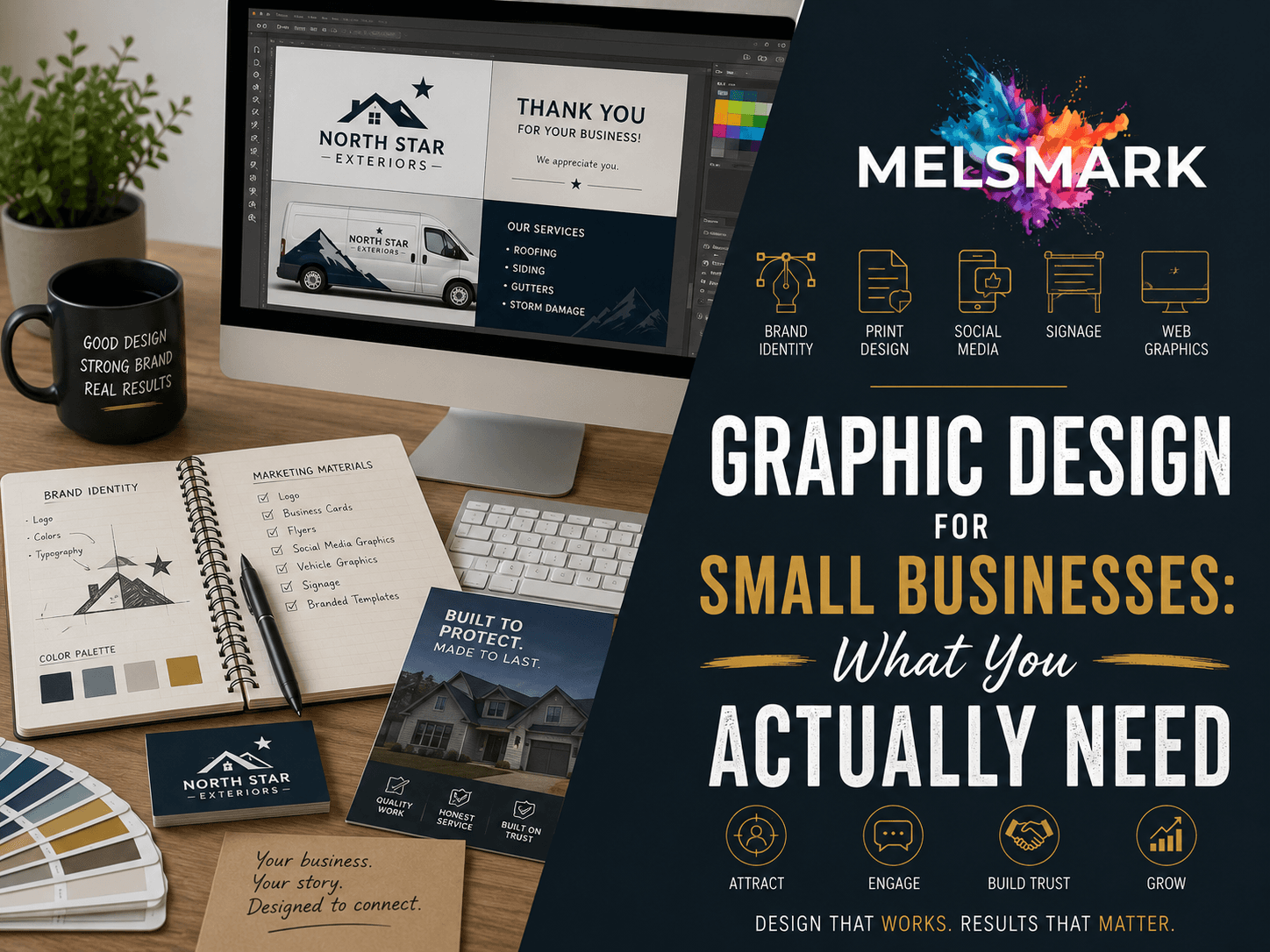
If you run a small business in Minnesota, you have probably wondered whether graphic design is worth paying for, or whether you can piece it together yourself with a free app and a spare afternoon. Maybe you already have a logo. Maybe you have been dragging the same blurry photo onto every flyer and Facebook post for two years. Either way, you are not quite sure what you actually need, or where your money is best spent.
Here is the honest answer. Most small businesses do not need everything a design studio can sell them. But they do need a handful of core pieces that make them look established, consistent, and easy to trust. This guide walks through what small business graphic design really covers, what to invest in first, and how to tell good design from simply expensive design.
What Small Business Graphic Design Actually Covers
Graphic design is a lot more than a logo. It is the whole visual language of your business, meaning the way everything looks the moment a customer sees it. That includes your logo, yes, but also your colors, your fonts, your business cards, your signage, your social media posts, and the flyers or menus you hand people in person.
When all of those pieces look like they belong to the same company, your business feels solid and put together. When they clash, or when each one looks like it came from a different place, people pick up on it even if they cannot say exactly why. Consistent design quietly tells customers that you take your work seriously, and that carries over to how they judge everything else you do.
The core pieces most small businesses need
You do not need all of this on day one. Over time, though, most small businesses end up needing a logo, a simple set of brand colors and fonts, a business card, and a template or two for social media. If you sell in person, add signage. If you mail things or leave materials behind, add branded print pieces. The trick is to start with the logo and the brand basics, then build out as you grow, rather than trying to buy everything at once. If you would rather hand the whole thing off, that is exactly what professional graphic design for small businesses is for.
Your logo is the anchor for all of it, which is why why your logo matters more than most owners realize is the first thing worth getting right.
What to Invest In First, and What Can Wait
Money is tight when you are running a small business, so spend it where it does the most work. Your logo comes first, because it shows up everywhere, from your sign to your website to the corner of every invoice. After that, put together a small brand kit, which just means your colors and fonts written down in one place so everything you create stays consistent.
Next comes whatever your customers see the most. For a restaurant, that might be the menu. For a contractor, it is the yard sign and the truck decal. For an online shop, it is social media templates. Look at where your customers actually run into your business and put your design dollars there first.
So what can wait? Fancy brochures, custom illustrations, and anything that mostly just looks nice without doing a real job. Those are fine down the road, once the essentials are earning their keep. There is no shame in starting small. A focused set of well-made pieces beats a giant pile of average ones every time.
Good Design vs. Expensive Design
Here is something a lot of business owners have backwards. Good design is not about how much you spend. It is about whether the design does its job, which is getting noticed, being remembered, and making people trust you enough to pick up the phone.
A clean, simple logo from a thoughtful designer will almost always outperform a busy, overworked one that cost three times as much. The same goes for your flyers, your signs, and your website graphics. Simple and clear beats flashy and cluttered nearly every time, because your customer is busy and only gives you a second or two to make sense of what you do.
This is also where doing it all yourself can go sideways. Free tools are perfectly fine for a quick internal flyer or a last-minute sign. But when you stretch a logo until it looks fuzzy, mix six different fonts, and pull colors that fight with each other, customers notice. They may not know a single rule of design, but they can tell when something looks off, and that gut feeling shapes whether they trust you.
How Graphic Design Connects to Your Website
Your website is usually the first place a new customer takes a real look at your business, so your design has to carry all the way through to it. The colors, fonts, and logo on your site should match your business cards and your signs out in the world. When they line up, every piece reinforces the same impression. When they do not, your online presence feels disconnected from the real thing, and that little mismatch chips away at trust.
If you are building or refreshing your site, it pays to have your graphic design and your web design working from the same playbook. That is easier when one person handles both, or when your designer and your web designer are actually talking to each other. If you are just getting started, it helps to understand whether your small business needs a website at all and what to expect when you hire a web designer before you spend a dime.
The Takeaway
You do not need a big marketing budget to look professional. You need a few strong pieces of graphic design that work together and represent your small business the way you would want to be remembered. Start with a solid logo, lock in your colors and fonts, and build out from there based on where your customers actually see you. Good small business graphic design is one of the cheapest ways to look bigger and more established than you might feel on a slow week, and it pays for itself in the trust it earns you.
Frequently Asked Questions
How much does graphic design cost for a small business?
It depends on what you need and who you hire, but most small businesses do not have to spend a fortune to look professional. A well-made logo and a basic brand kit are the smart first investment, and you can add pieces like signage or social media templates over time. Focus your budget on the items your customers see most, and treat the rest as nice-to-have for later.
Can I just use Canva instead of hiring a designer?
Free tools like Canva are great for quick, everyday items once you already have solid brand basics in place. Where they fall short is the foundation, meaning your logo and your core look. A designer builds those the right way so they hold up at any size and across every use. A good approach is to hire out the foundation, then use templates to handle the day-to-day graphics yourself.
What graphic design should a small business get first?
Start with your logo, since it appears on nearly everything you make. Next, lock in a small set of brand colors and fonts so your materials stay consistent. After that, invest in whatever your customers see most, whether that is a menu, a yard sign, a business card, or social media templates. Build out from there as your business grows.
Ready to make your small business look the part?
I'm a graphic and web designer based in East Bethel, MN, helping small businesses across Minnesota build a clear, consistent look, from logos to full brand kits.
Let's talk about your project. Contact me